AI Tech Magic
A website for an AI practice that sells to people who run plants
AI Tech Magic builds assistants that answer operators' questions from a plant's own manuals and procedures, and show the page each answer came from. Its buyers are plant managers and operations leaders. They have heard a great deal about AI and have been shown very little of it working. The website had to earn a thirty-minute call from that audience.
Most AI consultancy sites speak to technologists. This one had to speak to someone responsible for a production line, who is practical, short of time, and wary of anything that might give an operator a wrong answer. That reader wants to know what they would get, what it costs, who is behind it, and what happens when the system does not know. A site that avoids those questions loses them.
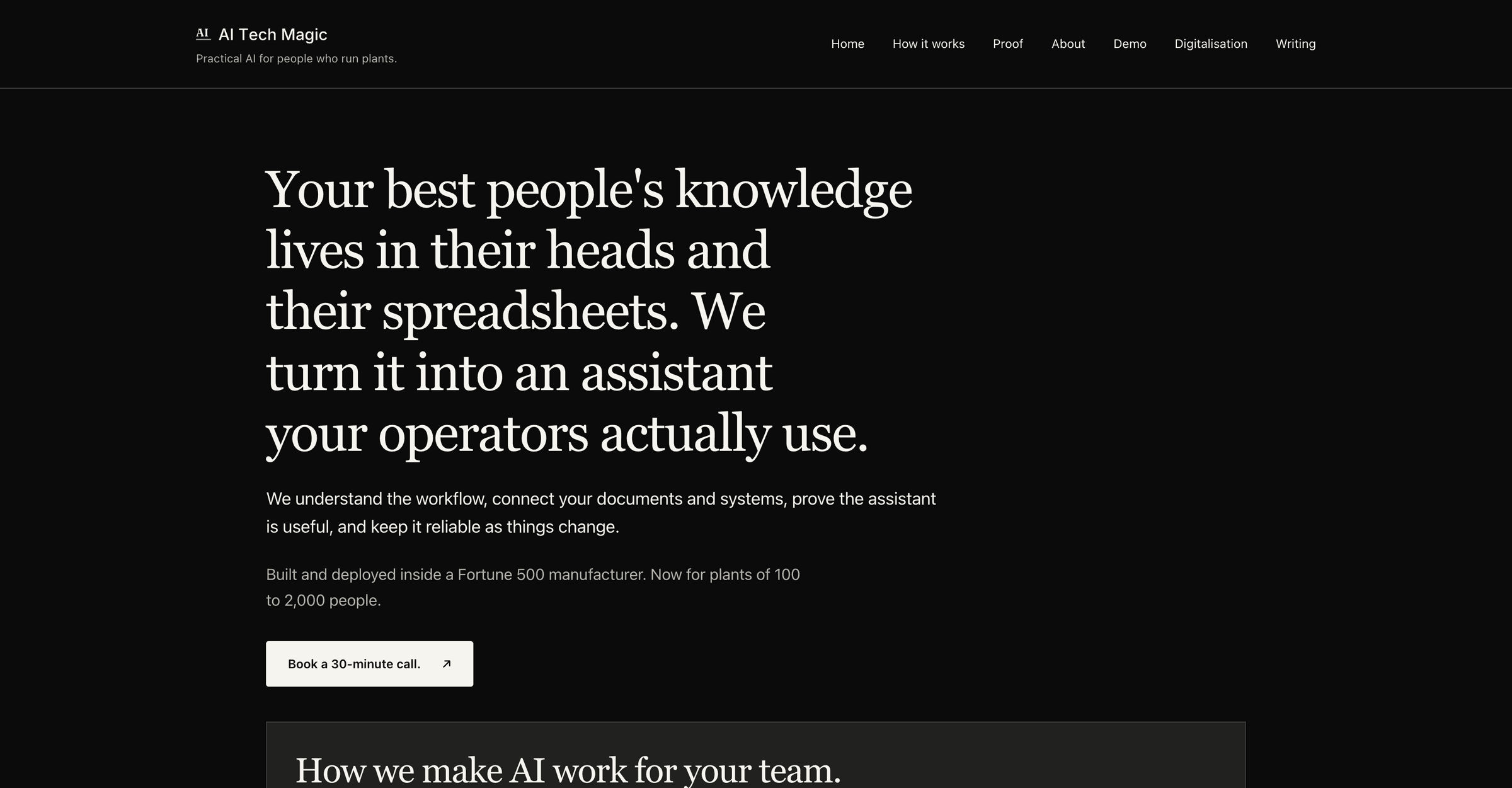
We wrote and designed the site around the buyer's own problem. The headline describes it in their terms: knowledge that lives in people's heads and spreadsheets. Nothing on the first screen mentions a model or a platform.
From there the page answers questions in the order a careful buyer asks them: how it works, what the offer is, what has been built before, who does the work, and what a fixed-price build covers. The offer is narrow on purpose, one department and one working assistant.
Claims are kept modest and limits are stated. The demo page says what the demonstration proves and what it does not.
The design is plain. A serif headline, a sans-serif body, black and warm white, one gold accent. There is one call to action, repeated: book a thirty-minute call.
The home page opens with the situation every plant recognizes: the best people's knowledge is in their heads and their spreadsheets. The line beneath says what the practice does about it, and the one after that says where the experience comes from and who it is for.
The full page follows a buyer's reasoning. It shows the assistant answering from a manual, names the problem of the expert who is not on shift, sets out a single fixed-scope offer, and then gives the evidence: past results, the founder's background, and the team. It ends with the common objections, answered directly.
A demonstration that states its limits
The demo page promises one thing: an answer you can trace back to the manual. It lists what a guided session will cover, including a question the assistant should decline to answer. It also says plainly that the demo uses public manuals and does not validate the system for the visitor's own equipment.
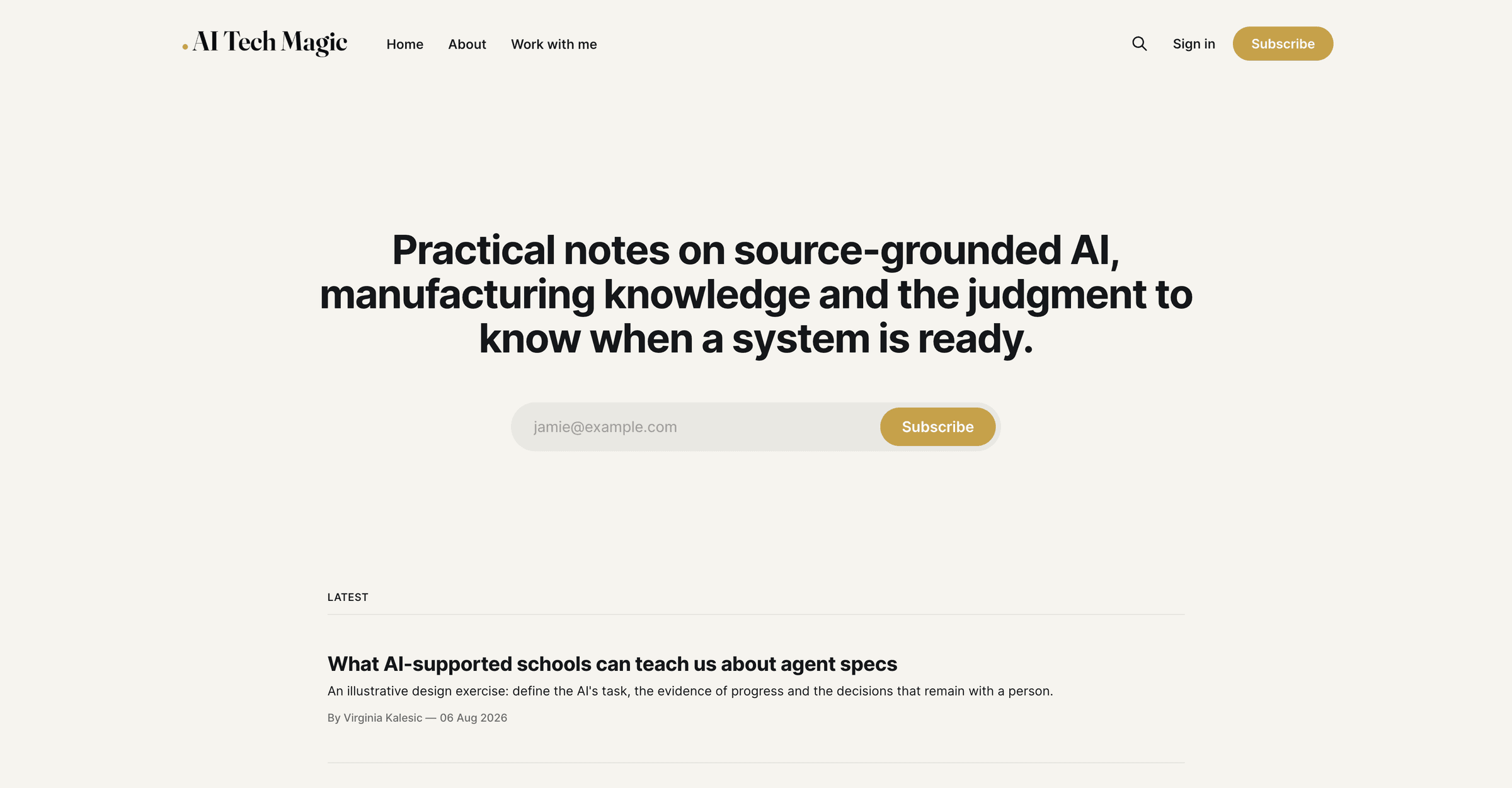
A separate notes section carries the founder's writing on source-grounded AI and on judging when a system is ready. It is set apart from the sales pages, with its own subscription, so the writing can be read on its own terms.
The site tells a plant manager what they would get and what it would not do, and asks for thirty minutes.
Have a project in mind?
We take on a limited number of projects each quarter. Tell us what you're building.
Get in touch →